
Still unsure which region?
A few questions, under three minutes, and a French destination that matches what appeals to you.
Table of Contents
7-Day Paris and Provence Itinerary
- Day 1 in Paris: Louvre Museum, Tuileries Garden and Seine River Cruise
- Day 2 in Paris: Eiffel Tower or Musée d’Orsay, Saint-Germain and Montmartre
- Day 3: Paris to Avignon by TGV and Exploring the Palais des Papes
- Day 4 in Provence: Luberon Villages, Gordes, Sénanque and Roussillon
- Day 5: Avignon to Aix-en-Provence and a Walking Tour of the Old Town
- Day 6 in Provence: Calanques of Cassis or the Côte Bleue Coastal Train
- Day 7: Arles, Les Baux-de-Provence or Marseille Before Departure
If you have 7 days in France, one of the best itineraries is to split your time between Paris, Avignon, and Aix-en-Provence. Spend 4 days in Paris, take the TGV to Avignon, explore the Luberon villages with a rental car, then finish in Aix-en-Provence for the Calanques, Cassis, or Marseille. This route gives you the best mix of Paris landmarks, Provence villages, and Mediterranean coast without changing hotels every night.
Combining the grand, structured elegance of Paris with the slow, sun-baked charm of Provence is arguably the most satisfying contrast you can find in a single French trip. I recommend this specific route because it delivers exactly what most travelers are looking for: world-class art and history up north, followed by medieval hilltop villages, rocky coastal inlets, and the Mediterranean Sea down south.
You will start your week in Paris, catch the high-speed train down to Avignon, weave through the famous Luberon valley, spend time in the elegant streets of Aix-en-Provence, and eventually go to the famous Calanques.
The quickest way to ruin a compressed itinerary like this is by changing hotels every single night. Living out of a suitcase and managing morning check-outs will completely drain your energy. Instead, I strongly suggest establishing just three base camps for the entire week: one in Paris, one in Avignon, and one in Aix-en-Provence.
The transit logistics are surprisingly straightforward. You can rely entirely on the national rail network to connect the major cities. Also, the TGV ride from Paris to Avignon is fast and effortless. The only time you will truly need to pick up a rental car is during your stay in Avignon, which gives you the freedom to explore the rural, disconnected villages at your own pace.
Best Time to Visit Paris and Provence
Paris is a brilliant city year-round, but because the southern half of this trip relies so heavily on outdoor markets, coastal walks, and café terraces, the window between April and late October is by far the best time to do this route. The days stretch out beautifully, meaning you do not feel rushed to fit everything in before dark.
Managing the summer peak
July and August in the south of France are undeniably beautiful, but they can also be fiercely hot sometimes pushing 40°C (104°F) and very crowded. If you travel during the peak summer months, simply adopt the local rhythm: do your exploring early in the morning, take a long, shaded lunch or rest during the intense afternoon heat, and head back out around 5:00 p.m.
Paris to Provence Route Map for 7 Days
To help you visualize the distances and the flow of this 7-day Paris and Provence itinerary, we have put together an interactive map. You can toggle through the days below to see exactly where you will be and how the travel days connect.
7-day Paris & Provence itinerary map — Day 1
Arrival in Paris, the Louvre, Tuileries, and a Seine cruise
7-Day Paris and Provence Itinerary
Day 1 in Paris: Louvre Museum, Tuileries Garden and Seine River Cruise
Arriving in a new city can be exhausting, so the goal for your first day is to stay central and keep the pace manageable. Start right in the middle of town at the Louvre. I would not recommend trying to see the entire museum on your first day. It is so large that it is best to decide beforehand which artworks you most want to see.


When you are ready for fresh air, step right outside into the Tuileries Garden. From there, you can easily drop down to the paved banks of the Seine for a walk along the water. It is flat, pedestrian-only in many parts, and gives you an immediate sense of the city’s layout. Keep walking east along the water and you arrive at the Île de la Cité and the Île Saint-Louis, which is the line the private walking tour of Paris, the river and the two islands follows, if you would like a guide beside you for it.
As evening sets in, head to the riverboats often called bateaux-mouches. Booking a river cruise might sound like a tourist cliché, but seeing Paris illuminated from the water right around sunset is genuinely spectacular. It is a low-effort, high-reward way to end a travel day.
Day 2 in Paris: Eiffel Tower or Musée d’Orsay, Saint-Germain and Montmartre
For your first full morning, you have a choice to make depending on your travel style. If you want a deep dive into French art, head to the Musée d’Orsay to see an incredible collection of Impressionist paintings inside a former railway station. If you would rather check off the city’s most famous monument, head straight to the Eiffel Tower instead.
Book your morning ahead of time
Whether you choose the Musée d’Orsay or the Eiffel Tower, do not plan to just walk up and buy a ticket. The morning lines are notoriously long, so secure a time slot online well before your trip.

Either way, spend your afternoon exploring the Left Bank. Wander through the neighborhood of Saint-Germain-des-Prés, which is full of classic cafés, narrow streets, and excellent bakeries. Grab something to eat and take it to the Luxembourg Gardens. This park is where locals actually go to read, talk, and pull up one of the iconic green metal chairs around the central fountain.
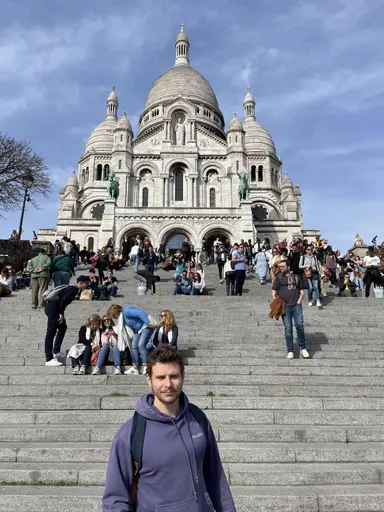
In the late afternoon, take the metro north to Montmartre and make your way up to Sacré-Cœur Basilica. Start by exploring the basilica itself and the large terrace in front, where you’ll get one of the best panoramic views over Paris. Then wander through the lively streets around Place du Tertre, the famous artists’ square at the heart of Montmartre. From there, take a short detour into the quieter nearby lanes before looping back to the front steps of the basilica just before sunset to watch the city lights come on.

An Alternative: Leaving Paris Early
If you want to cut down on your accommodation budget, you do not actually have to spend a third night in the capital. You can pack up and catch a late afternoon train down to Avignon at the end of Day 2. It saves you a night of Parisian hotel pricing and means you wake up in the south already positioned to explore.
Day 3: Paris to Avignon by TGV and Exploring the Palais des Papes
If you decided to sleep in Paris, head to Gare de Lyon in the morning and catch the high-speed TGV straight down to Avignon.
The two stations of Avignon
Avignon has two different train stations: Avignon Centre and Avignon TGV. The high-speed trains drop you at the TGV station, which is located a few miles outside town. You will need to take a quick local shuttle train (the navette) to reach the historic center. This is exactly the kind of practical detail we include in our itineraries, since it often surprises first-time visitors.

Once you have dropped off your bags, spend the afternoon walking through the historic core. The sheer scale of the Palais des Papes (Palace of the Popes) is incredible, and walking through the massive 14th-century fortress is the main event here.
But Avignon is also just a great place to slow down. I recommend finding one of the small, tree-lined squares tucked away from the main commercial streets, grabbing a table on a terrace, and having a drink while the afternoon cools off.
Day 4 in Provence: Luberon Villages, Gordes, Sénanque and Roussillon
This is the day you need to pick up a rental car in Avignon. Having a vehicle is the only practical way to explore the Luberon, a stretch of countryside known for its perched stone villages. Travelers who prefer not to drive can also arrange a chauffeur or private driver for the day.
Start by driving to Gordes, which looks incredibly dramatic as you wind your way up the hill toward it. Just down the road is the Abbaye de Sénanque, a working monastery famous for its valley setting. From there, drive over to Roussillon, a village that feels completely different because the architecture is entirely rendered in vivid shades of red and orange ochre.


To finish the afternoon, you have two choices depending on your travel style:
Option 1: L’Isle-sur-la-Sorgue If you prefer wandering through a lively town, head here. It is built around a network of small canals and has a great, relaxed atmosphere. Thursday and Sunday are market days, which makes it an even better time to visit. If you are there on one of those days, plan to come in the morning to enjoy the market at its best before the town gets busier later in the day.
Option 2: Le Colorado Provençal If you would rather stretch your legs in nature, drive over to this former ochre quarry. It offers a relatively easy, short hike through striking, deeply colored dirt trails and bizarre rock formations. It is a highly visual, outdoor alternative to walking through another town.

These places, filmed on location for the Itinerary France channel: “6 Most Beautiful Villages in Provence”.

Nothing is loaded from YouTube until you start the video. Once you do, YouTube may store data on your device.
Don’t forget to drop off the rental car on that day!
Day 5: Avignon to Aix-en-Provence and a Walking Tour of the Old Town

On Day 5, I suggest moving to Aix-en-Provence. Simply take the regional train for this trip. Driving into the center of Aix is often more trouble than it is worth, as the city was built long before cars were a consideration. Parking can be both scarce and surprisingly expensive, so letting the train handle the transit is much more relaxing.
Once you arrive, just spend the day wandering. Aix-en-Provence is known as the city of a thousand fountains, and it is a place made for slow strolling. The main thoroughfare, the Cours Mirabeau, is lined with grand plane trees and historic cafés. It is elegant, polished, and has a very different energy than the more rugged, medieval streets of Avignon.

Day 6 in Provence: Calanques of Cassis or the Côte Bleue Coastal Train
Day 6 is all about the Mediterranean coast. You have two excellent ways to see the Mediterranean, depending on how much physical effort you want to put in.
Option 1: The Calanques of Cassis You can reach Cassis by train followed by a local bus into the center. If you are up for a hike, start at Port Miou and make your way toward the Calanque d’En Vau. I should be honest here: the trail to En Vau is not a casual walk. It involves some steep, rocky scrambles that can be slippery. However, the view of the turquoise water wedged between massive white limestone cliffs is easily one of the best in France.


My tip
If a rocky hike sounds like too much work in the sun, I highly recommend renting a small boat for the day from the port in Cassis. It allows you to see the cliffs from the water without the sweat, and it is often the better choice if you are visiting in the middle of a summer heatwave.
Option 2: The Blue Coast Train

This is a favorite of mine for a more relaxed day. Head to Marseille and board the Train de la Côte Bleue. This local line hugs the cliffs and stops at small fishing villages like Niolon or Ensuès-la-Redonne. You can hop off, find a quiet spot on the rocks to swim, and catch a later train back. It is a very local way to experience the coast without the typical crowds of the major tourist spots.
Day 7: Arles, Les Baux-de-Provence or Marseille Before Departure
How your final day plays out will depend entirely on your travel connections. If you have an afternoon flight out of Nice or a high-speed train booked back to Paris, you might only have time for a final coffee in Aix before heading to the station.
But if your schedule allows for one last full day of exploring, you have two distinct ways to finish the trip.
Option 1: Roman History and Hilltop Fortresses (Car Required)

If you do not mind picking up a rental car for the day, drive west toward Arles. The draw here is the Roman architecture, specifically a massive, incredibly well-preserved stone arena that still anchors the center of town. After spending the morning in Arles, you can drive up into the hills to see Saint-Rémy-de-Provence or walk through Les Baux-de-Provence, an imposing medieval fortress village that feels carved directly out of the jagged rock. Because these inland spots are poorly connected by public transit, having a vehicle is non-negotiable if you want to pull this off smoothly.
Option 2: Marseille and the Mediterranean (By Train)
If the thought of picking up another rental car sounds exhausting, skip it entirely. Instead, take the quick regional train from Aix down to Marseille. The city is vast and full of energy, but if you only have a few hours, head straight to the Vieux-Port (Old Port), then make your way up to Notre-Dame de la Garde for one of the best views over the city and the sea. Afterward, it is the perfect area to linger by the water, soak up the rich Mediterranean atmosphere, and enjoy a long seafood lunch before you eventually have to collect your bags and head home.

Watch the clock
This is usually the point in a trip where logistics start to feel stressful. Balancing regional transit schedules with your final flight or outbound TGV departure is exactly the kind of granular detail we map out carefully in our custom itineraries, so you never have to worry about missing a connection while trying to squeeze in one last activity.
Where to Stay in Paris, Avignon, and Aix-en-Provence
As I mentioned earlier, the secret to enjoying a fast-paced trip is minimizing how often you change hotels. Packing up your suitcase every single morning is annoying, adds a surprising amount of daily stress, and quickly eats into your exploring time.
This is why I always recommend anchoring yourself in just three places. You will want a solid base in the capital (you can read my dedicated guide on where to stay in Paris for first-timers), followed by Avignon and Aix-en-Provence. If you need help picking a specific hotel or neighborhood down south, we have a detailed breakdown on where to stay in Provence that covers the best local options.
Paris to Provence Transport Guide
For the main legs of this journey, the train is absolutely the way to go. Traveling between Paris, Avignon, and Aix-en-Provence on the rail network is vastly less stressful than navigating a long drive on the French motorways. It also tends to be much easier on your budget.

However, I do highly recommend renting a car for the specific day you explore the villages around Avignon. Relying on public transit for deep rural Provence is incredibly frustrating. Trains simply do not reach the small hilltop towns. While local buses do exist, their schedules are sparse. Trying to build a day trip around rural bus timetables means you will spend most of your afternoon waiting by the side of the road rather than actually enjoying the landscape.
If the thought of driving on narrow country roads makes you nervous, you are not alone. A brilliant workaround is to hire a local driver for the day. Many of them double as regional guides, which turns a potentially stressful navigation challenge into a completely relaxed, deeply informative experience.
Paris and Provence Trip Budget
It is impossible to give a single number that fits everyone, but it helps to have a realistic baseline. If you are traveling as a couple during the high season, here is what you should expect to spend on the core logistics.
| Item | Estimated cost |
|---|---|
| Paris hotel (3-star, per night) | 150€ to 250€ |
| Avignon / Aix-en-Provence hotel (per night) | around 120€ |
| One-day rental car in the south (without fuel) | 100€ to 200€ |
| Train tickets for the full trip (per person) | 100€ to 250€ |
| Baseline total for the week (excluding meals and activities) | 1000€ to 1600€ |
Train prices fluctuate widely depending on demand. For the full trip, you might spend around 100€ per person in the low season, while that total can easily rise to 250€ per person in the middle of summer.
Without factoring in meals or daily activities, the total cost for accommodation and transportation alone usually comes to roughly 1000€ to 1600€ for the week.
Plan your Paris–Provence budget before booking
For a 7-day itinerary with the TGV, Avignon, Aix, and the Calanques, see how our travel design service works: a detailed quote for your whole trip, a clear process before you commit, and every booking handled for you once you approve the quote.
Practical Tips for a Paris and Provence Trip
- Lock in your train tickets early: The French rail system operates on dynamic pricing, much like airlines. If you wait until the last minute to book a summer TGV ticket, you will pay a massive premium, assuming the train is not already completely sold out.
- Shift your daily schedule: If you are traveling in July or August, the afternoon heat in Provence is intense and the crowds are thick. I suggest doing your heavy exploring early in the morning, resting during the peak heat, and heading back out after 4:00 p.m. You do not need to worry about running out of time. In the middle of summer, the sun stays up until around 9 to 9:30 p.m., giving you long, beautiful evenings on the terraces.
- Book your rental car online: Never just walk up to an agency counter expecting a fair rate. Walk-up prices can easily be three times higher than what you would pay if you compared options and booked online a few weeks prior.
Paris and Provence Itinerary FAQ
Is 7 days enough for Paris and Provence?
You could spend a month in France and still feel like you are leaving things unseen, but seven days is a fantastic window if you structure it correctly. It gives you just enough time to appreciate the heavy, structured architecture of Paris before shifting gears to the postcard-perfect villages and rocky coastline of Provence. You get a complete, deeply satisfying contrast without burning yourself out.
What is the best way to travel from Paris to Provence?
Take the high-speed TGV. I cannot stress this enough: do not rent a car in Paris with the intention of driving the entire route. Driving in the capital is incredibly stressful, and taking the highway down south eats up a massive chunk of your vacation time. Let the train do the heavy lifting to get you to Avignon or Aix-en-Provence, and only pick up a local rental car when you are ready to explore the rural countryside.
Do I need to rent a car in Provence?
If you want the full, unhindered experience of Provence, yes. While the train network connects the major southern hubs beautifully, public transit to the smaller hilltop villages is highly impractical. Without a vehicle, you miss out on the freedom to explore at your own pace. If navigating narrow French country roads makes you anxious, the best alternative is to hire a local driver or guide for the day so you can still reach the interior without the stress.
What is the best month to visit Paris and Provence?
The shoulder months of April through June, along with September and October, are the undisputed winners. The weather is generally beautiful and the crowds are entirely manageable. July and August are visually stunning but come with intense heatwaves, premium hotel pricing, and heavy tourist traffic on the coast. Winter is an interesting wildcard, though a winter version of this trip has to be built differently. You will have the destinations largely to yourself, and Provence often hovers around a crisp, sunny 12°C (54°F), but you have to accept that Paris will likely be wet and grey during those months.