
Still unsure which region?
A few questions, under three minutes, and a French destination that matches what appeals to you.
Mapping out a trip to France is much easier once you cut through the noise. My approach is simple: I align three variables—your travel style, the time of year, and how you intend to move (train vs. rental car). If you set a realistic scope and choose strategic bases, France becomes remarkably easy to navigate, offering an incredible range of experiences even if you only have a few days.
Here is what I’ve laid out in this guide:
- A reliable framework for planning (scope, home bases, and pacing),
- A decision-making guide to picking where to go in France based on your vibe,
- Plug-and-play itinerary templates (Mont-Saint-Michel + Saint-Malo, Cultural Paris),
- Logistics checklists for transport and lodging,
- The most frequent travel blunders—and exactly how to avoid them.
Table of contents
- The foundations: Decisions that simplify everything
- Where to go: Choosing your region by style and season
- Concrete itinerary templates to follow
- Getting around: Transport without the headache
- Budget and pace: Benchmarks for a stress-free trip
- Accommodation: My method for hotels and rentals
- Common logistics mistakes to avoid in France
- How ItineraryFrance helps you plan (without taking the wheel)
- FAQ: Planning your France trip
- Conclusion
- Sources & methodology
Planning a trip to France: the decisions that make everything easier
A successful trip comes down to scope. You can certainly mix history, world-class museums, and diverse landscapes, but I find the experience is always better when you simplify the logistics. I recommend building your trip around a few strong anchors—balancing city walks with countryside escapes or coastal detours depending on the weather.
My go-to planning framework
- Scope: Stick to 1–2 regions; don’t try to conquer four at once.
- Logistics: Limit yourself to 2 bases (no more than 3 for a week-long trip).
- Focus: Identify 2–3 “pillars” per base (one major landmark, one historic district, one local experience).
- Pace: I aim for 1 major visit + 1 neighborhood walk per day.
- Mobility: Take the train between cities, rent a car for villages, and use public transit or your feet inside cities.
- Booking: Once your route is set, lock in the essentials (TGV tickets, key nights, major museum slots) early.
- Flexibility: Always leave a buffer for weather, fatigue, or a spontaneous find.
France has 54 UNESCO sites: Treat them as anchors, not a checklist
Cultural heritage is everywhere in France, not just in Paris. To plan effectively, I suggest picking 2 or 3 cultural “pillars” to anchor your days. Attempting to see every landmark on the map is the fastest way to burn out.
With 54 World Heritage sites across the country, you won’t see them all in one go—choose the ones that actually excite you.
Need a hand mapping out your France trip?
Avoid the logistical headaches. We can help you structure a realistic route that balances your must-see stops with the right travel pace.
Why “bases” beat moving every single night
France is incredibly diverse, but your enjoyment largely depends on how you move around. I’ve found that two well-chosen bases beat rushing from place to place and changing hotels every night. You’ll save hours of packing and transit, feel less tired, and get a much better sense of the local rhythm.
Managing your energy (not just your time)
Chaining massive museums back-to-back usually leads to “museum fatigue.” I prefer a sustainable rhythm: one big museum in the morning, followed by a relaxed stroll through a neighborhood in the afternoon. In Paris, a place like the Louvre is huge and drains your energy faster than you’d think. Always double-check official websites for current hours and booking requirements before you show up.
Now, let’s pick your region. The best choice isn’t necessarily the most famous one; it’s the one that fits your time and travel style.
Choose where to go in France: regions by travel style + season
To decide where to go, filter your options by these three criteria:
- Vibe: Are you looking for culture, coastlines, nature, stone villages, gastronomy, or mountains?
- Timing: Are you visiting in the heat of summer, the quiet off-season, or the shoulder season?
- Mobility: Are you strictly train-bound, or are you comfortable driving for a few days?
8 zones to help you find your bearings
- Paris & Île-de-France: Iconic museums, architecture, and endless urban exploring.
- Brittany / Normandy: Wild coastlines, dramatic tides, and deep history.
- Loire Valley: Fairy-tale châteaux and easy cycling; perfect for short escapes.
- Alsace: Picture-perfect villages and vineyards in a very compact area.
- The Alps: High-altitude hiking and lakes in summer; world-class skiing in winter.
- Provence: Lavender fields, stone villages, and art history (best at a slow pace).
- French Riviera (Côte d’Azur): Mediterranean glamour and hill-top culture (avoid peak summer if possible).
- Southwest: Atlantic surf, rich food, and longer distances between stops.
Quick-selection guide (to avoid over-scheduling)
| Region | Best for | Ideal length | Suggested season |
|---|---|---|---|
| Paris | First-timers, culture | 3–5 days | Year-round |
| Brittany/Normandy | Coastline, heritage | 4–7 days | Spring/Summer |
| Loire Valley | Châteaux, cycling | 3–5 days | Spring/Autumn |
| Alsace | Villages, wine, markets | 3–5 days | Autumn/Winter |
| Alps | Hiking, nature, skiing | 4–7 days | Summer/Winter |
| Provence | Stone villages, art | 4–7 days | Spring/Autumn |
| French Riviera | Sea, sun, museums | 3–6 days | Spring/Autumn |
| Southwest | Ocean, gastronomy | 5–10 days | Spring/Summer |
Let the seasons guide you: if it’s mid-summer, I suggest starting your days early. If it’s the off-season, you can be a bit more spontaneous with your schedule.
Ready for a solid France itinerary?
Save hours of research by using our free pre-optimized guides. They include specific timing, transport links, and local tips to make your trip effortless.
Once you’ve picked a region, you need a plan. Here are templates you can drop right into your schedule.
Ready-to-follow itinerary templates (concrete examples)
Keep in mind that travel times are estimates—traffic, train connections, and the time of year will play a role. These are robust structures I’ve designed for you to adapt.
A) 2 full days: Mont-Saint-Michel + Saint-Malo
The Strategy: I recommend starting in Saint-Malo for the “corsair” history and sea air, then hitting Mont-Saint-Michel when the crowds begin to thin (late afternoon). Bases:
- Saint-Malo: Stay “Intra-Muros” (inside the walls) to be in the heart of it, or near the station for easier logistics.
- Pontorson: A very practical base for your second night, especially if you want to visit the Abbey late and don’t have a car.
Day 1 — Saint-Malo, Cancale, and the ramparts at sunset

- Morning: Explore Saint-Malo on foot. Walk the top of the ramparts and the narrow lanes of the old town.
- Lunch: Head over to Cancale. If you like seafood, eating oysters right on the harbor is a rite of passage here. If not, the vibe and a galette are just as good.
- Afternoon: Visit Pointe du Grouin for some of the best views in the region. It’s almost always windy, so bring a layer.
- Evening: Return to Saint-Malo to catch the sunset from the ramparts. If it’s high tide, the natural seawater pool is a great spot to watch.
Day 2 — Pontorson and the magic of Mont-Saint-Michel
- Morning: Head to Pontorson and drop your bags at your lodging. If you’re taking the train, I suggest booking ahead during peak months.
- Late afternoon: Make your way to the Mont. I like to admire it from the footbridge first to appreciate the scale before heading into the village.

- Evening: Explore the lanes and ramparts as the day-trip crowds vanish. I suggest a late time slot for the Abbey—just make sure you book online in advance and check the final entry time.
- Bonus: If you have the energy, the walk back to see the Mont illuminated at night is unforgettable.
Always verify the shuttle schedules and opening hours on the official sites before you set off.
Pro timing: Save the Mont for late in the day
Want this exact trip with hours and a weather Plan B?
Get the granular details: exactly which shuttle to take, the best evening slots for the Abbey, and how to pivot if the weather doesn't cooperate.
B) 2 full days in Paris (condensed version)
The Plan:
- Day 1: One major museum hit (Louvre) + a classic “postcard” walk through the Tuileries and along the Seine.
- Day 2: Orsay (Impressionists) + the Left Bank (Saint-Germain/Luxembourg) + sunset at Montmartre.
Bases:
- Louvre / 1st Arrondissement: The center of everything. Best if you want to walk to the major sites in minutes.
- Latin Quarter / 6th Arrondissement: Quieter, very “classic Paris,” and perfect for accessing the gardens and Orsay.
Day 1 — The Louvre and the Seine at sunset

- Morning: Arrive in Paris and head straight to the center via Metro or RER. I recommend sticking to official lines and avoiding complicated transfers if you’re on a tight clock.
- From the Airport: Buy the specific “Paris Région —> Aéroports” ticket (check current rates at the station).
- Early afternoon: The Louvre. A timed entry slot is mandatory to avoid losing hours in line. Don’t try to see it all—pick 2 or 3 wings and call it a win. Note: it’s usually closed on Tuesdays.
- Afternoon: Walk from the Louvre through the Tuileries Garden, across the Pont des Arts, and down the Seine riverbanks. This is the best free tour in the city.

- Option: A 1-hour river cruise at dusk is a great way to see the city lights without any effort.
Day 2 — Impressionists, the Left Bank, and Montmartre

- Morning: Musée d’Orsay. I love this for a short trip because it’s dense and manageable in about 2–3 hours. Booking is highly recommended. (Closed Mondays).
- Early afternoon: Stroll through Saint-Germain-des-Prés to the Luxembourg Garden. It’s the perfect spot for a coffee and a park break.
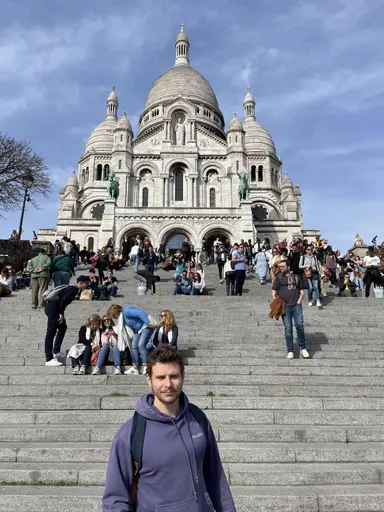
- Late afternoon: Head up to Montmartre and Sacré-Cœur. Take the back streets to avoid the heaviest crowds, and save some breath for the climb!
- Evening: Transit back to the station or airport. Give yourself a healthy buffer for the RATP lines during peak hours.
My 48h rule: One booking, one walk
Want this Paris plan with museum slots and crowd-avoidance tips?
Maximize a short stay with our optimized walking routes, specific Metro directions, and a curated list of neighborhood cafes along the way.
Transport in France: choose without overthinking

Here is the logic that works best: train for moving between cities, car for exploring the countryside, and walking or public transit once you are in a major hub.
The Train: City center to city center
The TGV is almost always the fastest way to travel between regions. I recommend booking as soon as your dates are firm to get the best “Prem’s” rates. Use SNCF Connect to check when tickets go on sale, and if you want a simple overview, see this complete guide to train travel in France.
The Car: For the villages and backroads
A car is essential if you want to see the small stone villages or the deep countryside. However, I’d avoid driving into city centers—parking fees and traffic restrictions (like ZFE zones) can make it a nightmare. If you’re planning a driving itinerary, this complete guide to road-trip in France is a helpful reference.
Buses: The backup plan
Coaches are useful for routes the train doesn’t cover well. Long-distance buses (like FlixBus or BlaBlaCar Bus) are cheaper but much slower. Always double-check where the stops are, as they aren’t always at the central station.
Planes: For extreme distances only
I only recommend flying if you need to cross the entire country (e.g., Nice to Brittany) and have very limited time. Otherwise, the train is much simpler.
The Decision Checklist:
- Major cities + tight timing → Train.
- Exploring villages/nature → Car (or a day tour).
- Navigating Paris → Metro/Bus + Walking.
- Driving into a city? Check the parking rules first.
Budget and pace: Benchmarks for a stress-free trip
Budgeting for France isn’t just about the total cost; it’s about where you allocate your money. Two things will drive your spending: location and mobility.
Pick your priority
I suggest focusing on one or two of these to keep your budget in check:
- “Time” Priority: Pay a bit more for a hotel near the station or metro to cut down on travel time.
- “Experience” Priority: Choose a simpler hotel so you can splurge on a private tour or a specific tasting.
- “Flexibility” Priority: Pay for refundable bookings so you can change your mind if the weather turns.
- “Control” Priority: Stick to fewer bases and simpler meals to keep costs predictable.
The best compromise for your first time
What drives the budget up (and how to reclaim control)
- High season + the “heavy hitters”: If you are targeting iconic spots, lock in your key visits and lodging the moment your route is firm. This is non-negotiable for major travel legs and popular dates.
- Strategic location: Staying on the outskirts to “save money” is often a trap. You’ll pay back the difference in Uber fares, public transit, and lost energy. I’ve found that paying a bit more for a central spot usually solves a dozen other problems.
- Last-minute gambling: Options thin out quickly, especially for trains and boutique hotels. Depending on the season, waiting too long can force you into expensive, inconvenient alternatives.
- Keeping a car in the city: Parking is a massive expense in French cities, and traffic restrictions are becoming stricter. Only rent a car for the days you are actually in the countryside.
During peak periods, your trip lives or dies by your bookings: secure your TGV seats and major museum slots early.
A sustainable pace for the long haul
- One major visit per day: This is my golden rule. It’s plenty.
- One neighborhood walk + one long break: This creates the balance you need to stay curious, not exhausted.
- Buffer time: Essential for train delays, sudden rain, or simply leaning into a spontaneous discovery.
Think of your accommodation as your logistics hub. A well-placed base makes every other part of your day simpler.
Where to stay in France: hotels, rentals, and my selection method
Your lodging needs to work for your itinerary, not against it. The right choice simplifies your logistics—whether that means being walkable to the center or right next to the train station.
Hotels: Reliable and straightforward
Best for: Short stays, moving between multiple cities, and anyone who wants a front desk and luggage storage. What to watch for: Rooms in historic centers can be small. Always check for an elevator and noise reviews if the hotel is in a lively district.
Apartment rentals (Airbnb): Space and independence
Best for: Families, stays of 4+ nights, or if you prefer having a kitchen and a bit more living room. What to watch for: Check-in can be more complex than a hotel. Look closely at house rules, noise levels, and how keys are handled.
Booking platforms: Your comparison engine
Best for: Rapidly filtering by location and price while securing flexible terms. What to watch for: Always double-check the cancellation policy and look for reviews from the last three months to get the “real” current state of the place.
Price check
My 6-point selection checklist
- Location: Is it near your main transit axis (station or metro) or a walkable center?
- Accessibility: Can you reach it easily on foot or via public transport?
- Noise: Is it on a main thoroughfare? Reviews usually highlight if a street is too loud at night.
- Seasonal comfort: Ensure there is AC or good ventilation for summer, and solid heating for winter.
- Parking: Only prioritize this if you genuinely need a car and the parking is on-site or very close.
- Cancellation: If your plan is still evolving, I highly suggest paying the small premium for a flexible rate.
The reviews + map combo
Once your base is set, the remaining risks are almost always about timing and itinerary flow.
Classic mistakes when traveling in France (France-specific)
Here are the most common planning blunders I see, and the simple fix for each.
- Trying to do “The Grand Tour” (Paris + South + Alps) in 7 days. → Fix: Stick to Paris plus one nearby region. You’ll actually enjoy the trip instead of just seeing it through a train window.
- Underestimating regional travel times, even with the TGV. → Fix: Not every connection is direct, and some require a detour through Paris. Build your trip around logical anchors and verify specific travel times between stops early.
- Moving hotels too frequently. → Fix: Aim for two or three bases per week. This gives you time to actually unpack and feel the rhythm of a place.
- Choosing a base purely on the room price. → Fix: A well-connected neighborhood is worth more than a few extra square meters. If you’re poorly connected, you’ll spend your savings on transit.
- Assuming a car is the best way to see everything. → Fix: In historic city centers, cars are a liability. Use them for the countryside and stick to trains and feet for the cities.
- Ignoring seasonality. → Fix: Places like the Riviera or Mont-Saint-Michel have vastly different hours and crowd levels depending on the month. Adjust your expectations and bookings accordingly.
- Winged-it museum visits. → Fix: In high season, the major sites sell out. Always check the official pages and book your entry weeks in advance.
- Misjudging Sunday and Monday closures. → Fix: Many shops and local restaurants close on Sundays (especially afternoons) and Mondays. Check the hours before you plan your day’s dining.
- Overlooking Low Emission Zones (ZFE). → Fix: If you are driving into a large city, check the current “Crit’Air” requirements. Cities are increasingly restricting which vehicles can enter urban centers.
ZFE: Check the rules before you drive in
Avoiding these pitfalls comes down to a simple method: solid foundations, realistic routes, and built-in alternatives.
How ItineraryFrance helps you plan (without taking the wheel)
At ItineraryFrance, we design your trip day by day, then take care of everything that has to be booked in France: hotels, trains, restaurants, private guides, activities. You set the direction, the pace and the budget. Once the quote suits you, there is not a single reservation left for you to handle.
1) Ready-to-go trips (Self-guided)
Who it’s for: You want a professional plan but don’t want to start from scratch. The logic: You start from an itinerary that is already optimized, day by day (neighborhoods, timing, routes, and “Plan Bs”). There are two ways to use it: follow it freely on your own, or hand it to us so we can fit it to your dates and then book everything for you.
2) Custom Itinerary Planning (Travel Designer)
Who it’s for: You have tight dates, a specific budget, a family group, or a complex route that needs to work perfectly the first time.
What you get: A trip designed for the real world, accounting for fatigue, weather, and opening hours. This isn’t a rigid schedule; it’s a smooth flow. We book all of it, and it comes together in your travel booklet before you leave.
- Summary + Map: A visual overview of your journey.
- The Daily Plan: Realistic durations, travel times, and Google Maps links.
- Accommodation: 2–4 vetted options per stop based on neighborhood logic. You choose, we book.
- Activities & Time Slots: What to see and when, with the tickets and slots reserved in your name.
- Logistics: Transfers, rail passes, rental advice, and local transit.
- Dining: Selected spots and advice on whether you need a reservation.
- Budget & Buffer: Realistic estimates plus a contingency plan.
- Plan B: Alternatives for rain, exhaustion, or sold-out sites, plus a packing checklist.
The Process: We talk about your project, on WhatsApp or by email. We design the itinerary day by day and send you a detailed quote for the whole trip. You can adjust it as many times as you need. Nothing is booked before you approve it. Once you approve the quote and pay the deposit, we handle every booking in France, and you receive your travel booklet before departure.
Want this Paris plan with museum slots and crowd-avoidance tips?
Maximize a short stay with our optimized walking routes, specific Metro directions, and a curated list of neighborhood cafes along the way.
3) Support during your stay
What it is: We stay reachable throughout your stay, so you never have to rely on generic platform support. A check-in that goes wrong, a misunderstanding with a hotel, a restaurant to move, a missed train: we take care of it. It is included in the trip.
How: a direct line, given to you before departure. For a problem or a request, it is reachable at any hour; by message, we reply from 9am to 9pm. Note: This is logistical travel support, not emergency insurance.
If you’re still narrowing down where to go or when to fly, this FAQ covers the essentials.
FAQ: Planning a trip to France
How do I start planning my first trip to France?
Stick to the “2+1” rule: Paris plus one nearby region. Choose two bases to keep your transfers to a minimum. Focus each base on 2–3 pillars (a major site, a historic area, and one experience), and keep your pace to one big visit per day.
When is the best time of year to visit?
Spring and early autumn are the sweet spots for weather and crowd sizes. Summer is beautiful in the north but can be intensely hot in the south, and because it’s the school holiday season, the main tourist sites are at their busiest.
How long should I stay?
For a first trip, I recommend:
- 5–7 days: Paris + one nearby region (Normandy, the Loire, or Brittany).
- 10–14 days: Paris + two other regions (limiting yourself to 3 bases max).
Is it easy to get around without a car?
Yes. The train network between major cities is excellent, and cities themselves are very walkable with great transit. A car is only necessary if you want to explore the deep countryside or small, remote villages.
Should I book museums and trains in advance?
In high season, it’s a must. High-speed TGV trains and major museums (especially the Louvre or Orsay) often sell out their best time slots. Book them as soon as your dates are locked.
How do I avoid the crowds at Mont-Saint-Michel?
Arrive at the break of dawn or, even better, aim for the late afternoon and stay for the sunset. Always check the official shuttle and tide schedules before you go.
Hotel vs. Airbnb: Which is better?
It depends on your travel style:
- Hotels are best for short stays and if you value simple logistics.
- Rentals are better for families or if you want more space and a kitchen. Regardless of the type, I always suggest prioritizing location and transit access over the property’s “star” rating.
Conclusion
A great France trip isn’t about rushing; it’s about picking a realistic scope and building around well-chosen bases. Fewer hotel changes and a sustainable pace will give you a much smoother experience—and more time to actually enjoy being in France.
Your next steps:
- Pick 1 or 2 regions to focus on.
- Select 2 strategic bases.
- Lock in your major travel legs and key lodging.
- Build in a buffer to just sit in a café and enjoy the moment.
Sources & planning tools
- UNESCO World Heritage sites in France (official list): https://www.culture.gouv.fr/thematiques/monuments-sites/monuments-historiques-sites-patrimoniaux/les-biens-francais-inscrits-sur-la-liste-du-patrimoine-mondial-de-l-unesco
- Louvre Museum (official hours and ticketing): https://www.louvre.fr/visiter/horaires-tarifs
- SNCF Connect (check when train tickets go on sale): https://www.sncf-connect.com/aide/l-ouverture-des-ventes
- SNCF Connect (how to plan your journey): https://www.sncf-connect.com/aide/preparer-trajet
- RATP (Paris metro and bus route planner): https://www.ratp.fr/itineraires
- Paris Airport Transfers (official tickets for RER/bus): https://www.iledefrance-mobilites.fr/titres-et-tarifs/detail/ticket-paris-region-aeroports
- Mont-Saint-Michel Abbey (official info and tickets): https://www.abbaye-mont-saint-michel.fr/
- Accessing the Mont (parking rates and official hours): https://montsaintmichel.gouv.fr/acceder-au-mont-saint-michel/horaires-et-tarifs
- Low Emission Zones (ZFE) (check driving restrictions): https://entreprendre.service-public.gouv.fr/vosdroits/F38025
- Seine River Cruise (booking and availability): https://www.getyourguide.com/paris-l16/paris-fast-access-seine-river-cruise-from-eiffel-tower-t15928/
- Musée d’Orsay (booking and availability): https://www.getyourguide.com/paris-l16/orsay-museum-van-gogh-a-auvers-sur-oise-entrance-ticket-t65756/